World Water Day is celebrated annually on March 22. It was established by the United Nations in 1992 to call on governments, businesses, and citizens to protect water resources and ensure access to safe drinking water.
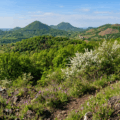
Every year, World Water Day invites us to reflect on an essential resource, increasingly precious and fragile. In Italy, the topic is far from abstract: in 2025, the average annual expenditure on water per family reached €528, a 30% increase compared to 2019, while national water wastage reached 42.4%, a clear sign of a resource under pressure and infrastructure requiring investment and innovation. Yet, there is a region where water is more than just consumption or a service: it is history, health, economy, culture, and collective identity. It is the region of the Euganean Spas, one of the largest thermal basins in Europe. The Euganean thermal waters undertake an extraordinary journey: they originate from rainfall in the Prealps and the Lessini Mountains, penetrate underground to depths of 2,000–3,000 meters, travel approximately 80 kilometers, and take thousands of years to resurface, enriched with minerals and geothermal energy. When they surface, they do so at high temperatures—often above 85°C—and with a unique chemical composition, classified as hyperthermal salt-bromine-iodine, rich in sodium, magnesium, iodine, and silicon, elements that make this water a natural asset for health and well-being. It’s more than just water. It’s geological time transformed into human value!
In an era of water scarcity and climate emergencies, spa treatments represent a different perspective: not just water consumption, but its sustainable valorization. At the Terme Euganee spa, water is used for treatments and wellness, but also to produce clean energy. It’s a concrete example of a circular economy applied to water, a model that combines health, the environment, and local development.
At the heart of this virtuous system, a hotel’s thermal well is more than just technical infrastructure; it is a source of life and a future. Inside the AbanoRitz Hotel Terme, water flows from its own well at approximately 87°C, feeding pools, spa treatments, and energy systems based on the natural thermal gradient. A well like this is not only generous: it is responsible. Responsible to its guests, who find health and well-being. Responsible to the local area, which builds jobs and identity. Responsible to future generations, who will inherit a resource protected with respect.
In too many parts of the world, water is now perceived as an emergency: rising costs, inefficient networks, increasingly frequent droughts. In spa communities, a different understanding exists: water is a heritage to be protected and shared, as demonstrated by the thousand-year history of Abano Terme. Here, water is a continuous investment in the quality of life. Water is not just something to be conserved, but rather something to be protected, enhanced, and celebrated. Because when water is respected, it becomes health, work, beauty, and a future. This, then, is our message for World Water Day, which embodies identity, culture, and responsibility. For those who live off spa treatments, water is more than an economic asset, more than a natural resource, more than a symbol.