


In Veneto, spring is not only heralded by longer daylight or milder air: it reveals itself in fields, markets, and on tables through a discreet yet deeply emblematic protagonist—the asparagus. White or green, cultivated or wild, this shoot represents one of the most refined expressions of the region’s seasonal agriculture, to the point of becoming a true cultural marker of the territory.
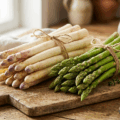
From a botanical point of view, asparagus all belong to the same species (Asparagus officinalis), but the differences between white and green are not varietal but agronomic. White asparagus grows entirely underground, sheltered from light: the absence of photosynthesis prevents the formation of chlorophyll, resulting in its pale color and more tender texture. Green asparagus, on the other hand, emerges from the soil and develops more herbaceous aromas and a slightly more fibrous structure.
In Veneto, both types have found an ideal habitat thanks to sandy, well-drained soils rich in shallow groundwater—features typical of the alluvial plain between the Piave and the Brenta rivers. It is no coincidence that some of the most renowned productions are concentrated here, such as the White Asparagus of Bassano, recognized as a Protected Geographical Indication (PGI).
These productions are not only gastronomic excellences, but also examples of specialized agriculture that has shaped rural landscapes and local economies since the 17th–18th centuries, when cultivation techniques spread across the irrigated areas of the Venetian Republic.
Wild asparagus: the taste of spontaneous ecology
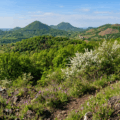
Alongside cultivated varieties, Venetian tradition preserves a more archaic and almost meditative dimension: the gathering of wild asparagus (Asparagus acutifolius). It grows spontaneously along hedgerows, riverbanks, and woodland edges, especially in hilly areas and calcareous soils. Its flavor is more intense, sometimes slightly bitter, and harvesting it requires experience and patience: the shoots are thin, camouflaged, and highly seasonal.
From a nutritional standpoint, wild asparagus contains higher concentrations of phenolic compounds and antioxidants—substances associated with cellular protection and the modulation of inflammation. It is no surprise that, in rural culture, foraging for wild asparagus was considered an almost ritual springtime practice: an exercise in observing the land and reconnecting with natural rhythms.
A functional food before it is gastronomic
Asparagus is one of the most studied spring vegetables in nutrition science. It is rich in:
- Folate (vitamin B9), essential for cellular metabolism
- Potassium, important for fluid balance and muscle function
- Inulin, a prebiotic fiber that supports gut microbiota
- Asparagine, an amino acid with a natural diuretic effect
These properties explain why, already in ancient medicine and later in European spa traditions, asparagus was associated with detoxification processes and metabolic reactivation typical of spring.
The season is very short: harvesting generally ends around St. John’s Day (June 24), a date that symbolically marks the end of the agricultural spring. The traditional harvesting method for white asparagus, involving manual cutting below the soil, still requires specialized skill today.
Asparagus, therefore, is not just an ingredient: it is a biological indicator of seasonal transition.




Leave a Reply